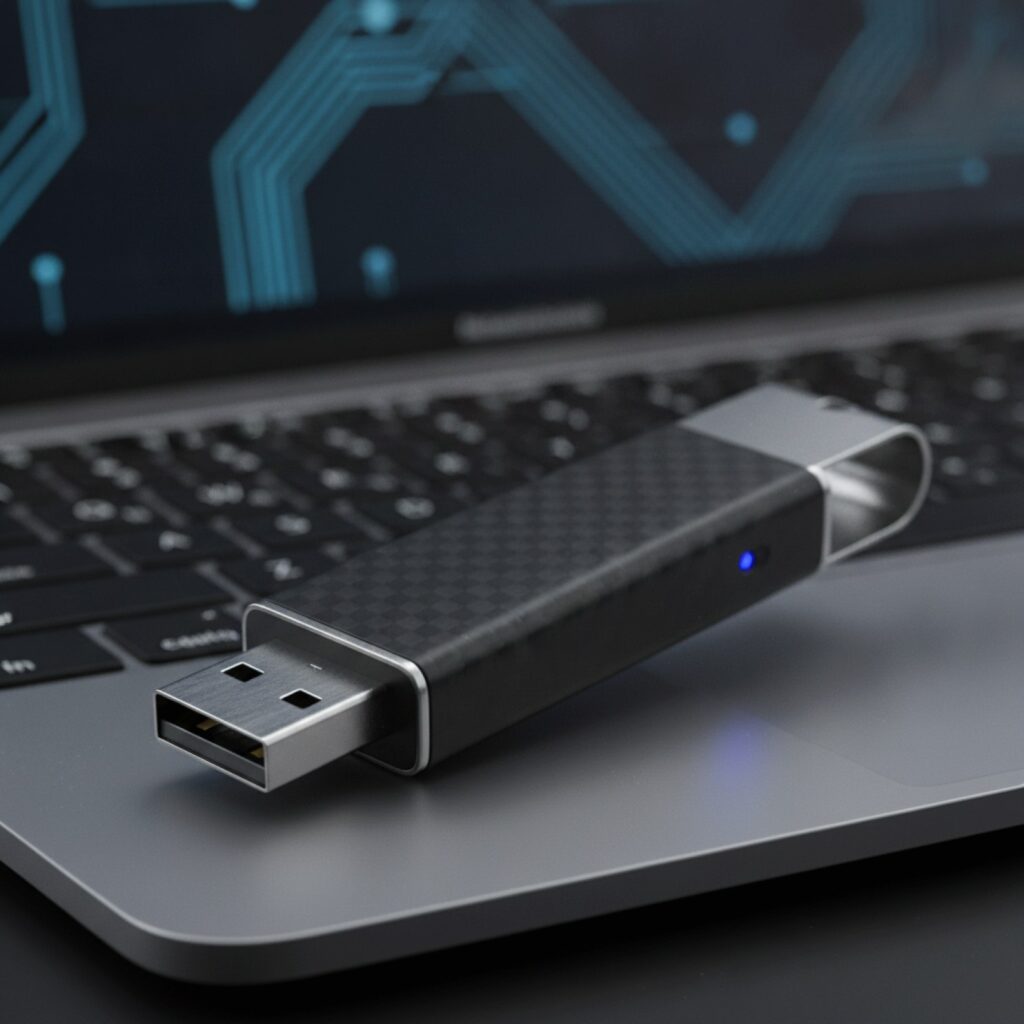
We would like to share important security information with everyone interested in cryptocurrency.Microsoft Corporation in the United States has discovered new malware targeting cryptocurrency wallets. This information was revealed in a report by an overseas media outlet dated June 19, 2026. This malware spreads via USB flash drives and poses a risk of stealing users’ assets. It primarily targets users of Windows-based computers.
Its objective is to steal users’ private keys (critical information proving ownership of cryptocurrency). It then aims to replace the recipient address with the attacker’s address when users attempt to transfer cryptocurrency. The method is extremely sophisticated.The malware exploits shortcut files (icons that provide quick access to specific programs or files). Through these files, it installs a worm (a type of self-replicating malware) onto the user’s system.
Once installed, the worm monitors the Windows clipboard (an area where information is temporarily stored).From there, it collects confidential information such as private keys. Furthermore, it detects when a user attempts to send cryptocurrency. It then automatically replaces the entered recipient address with the attacker’s address. This can result in unintended transfers and the potential loss of the user’s assets.
As the use of cryptocurrency expands, such cyberattacks are on the rise. It is essential for every user to raise their security awareness and take appropriate precautions. This warning from Microsoft once again underscores that importance. Users must stay informed about the latest threat intelligence and take action to protect their assets.
- New Threat Warned by Microsoft: Cryptocurrency Wallet Hijacking Malware
- Infection Vector: The Dangers of USB Drives
- Sophisticated Tactics: Exploiting Shortcut Files and the Clipboard
- Significant Risks When Sending Cryptocurrency
- Self-Defense Measures and Daily Precautions
- Raising Security Awareness When Using Cryptocurrencies
New Threat Warned by Microsoft: Cryptocurrency Wallet Hijacking Malware
Microsoft in the U.S. has discovered new malware targeting cryptocurrency wallets.
This malware spreads via USB flash drives.
It poses a risk of stealing users’ private keys (critical information proving ownership of cryptocurrency) and stealing their assets.
This discovery once again highlights the importance of security when using cryptocurrency.
Users are urged to exercise greater caution and take appropriate precautions.
Infection Vector: The Dangers of USB Drives
The primary infection vector for this malware is USB flash drives.
USB flash drives are widely used as a convenient means of data exchange.
However, there is always a risk that they could become a vector for spreading malware.
You should avoid casually connecting unknown USB flash drives to your computer.
Running files from untrusted sources also increases the risk of infection.
Strict rules are also necessary for the use of USB flash drives within companies and organizations.
Sophisticated Tactics: Exploiting Shortcut Files and the Clipboard
Malware launches attacks using highly sophisticated tactics.
First, it exploits shortcut files (icons that provide quick access to specific programs or files).
When this file is opened, a worm (a type of self-replicating malware) is automatically installed.
The installed worm monitors the Windows clipboard (an area where information is temporarily stored).
It collects confidential information, such as private keys and transfer addresses, that the user has copied.
Furthermore, when it detects a cryptocurrency transfer operation, it replaces the entered recipient address with the attacker’s address.
As a result, users end up sending their assets to unintended recipients.
A key feature of this scheme is that it is difficult for users to detect.
Significant Risks When Sending Cryptocurrency
This malware is most dangerous during cryptocurrency transfers.
The malware intervenes the moment the user copies and pastes the recipient’s address.
The legitimate address is automatically replaced with the attacker’s address.
Once the transfer is complete, it is generally impossible to reverse the transaction.
This is due to the irreversibility of cryptocurrency transactions (the nature of which is that once a transaction is executed, it cannot be reversed).
Therefore, once assets are stolen, it is extremely difficult to recover them.
It is crucial to always double-check the address before sending funds.
Self-Defense Measures and Daily Precautions
To protect yourself from such threats, it is essential to take precautions on a daily basis.
First, never connect a suspicious USB drive to your computer.
It is important to install reliable security software and keep it up to date at all times.
Be sure to update your operating system and any software you use on a regular basis.
When sending cryptocurrency, make it a habit to double-check the recipient’s address.
If possible, consider using a hardware wallet (a physical device that stores private keys offline).
Setting up two-factor authentication (additional authentication beyond a password) is also effective for strengthening security.
Implementing a combination of these measures can help reduce risk.
Raising Security Awareness When Using Cryptocurrencies
While cryptocurrency offers convenience, it also carries various risks.
In particular, cyberattacks are constantly evolving, and new threats are emerging one after another.
Each user is expected to take personal responsibility for managing their own assets.
It is also important to stay informed about the latest threat intelligence and keep your knowledge up to date.
This warning from Microsoft serves as a reminder of the importance of security measures.
To ensure safe cryptocurrency transactions, let’s maintain a high level of security awareness at all times.
[Source: Original Article]
Related Articles

* We are the official distributor of RedotPay in Japan.