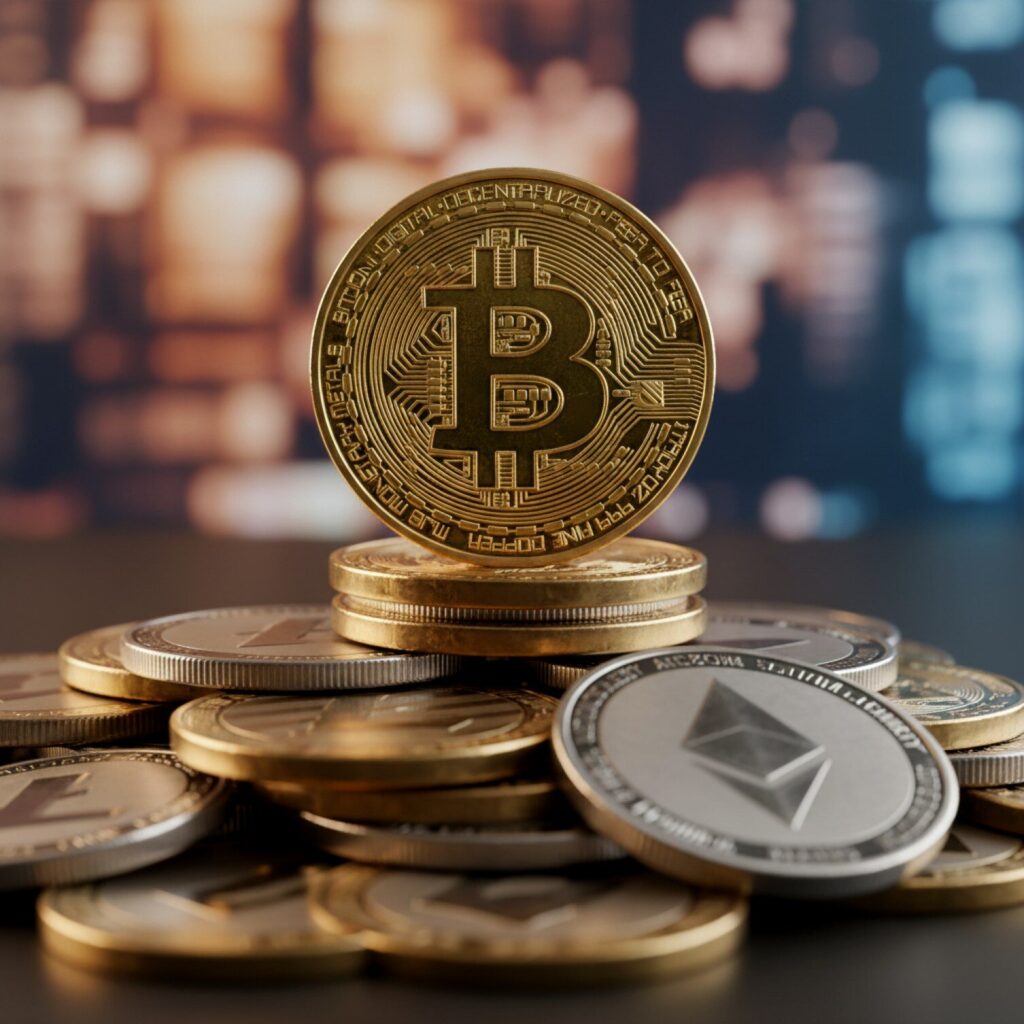
In the Bitcoin market recently, prices have been hovering below the $78,000 level. Of particular note are the outflows from spot Bitcoin ETFs (exchange-traded funds). Over the past two weeks, a total of more than $1 billion has flowed out.This trend is occurring amid speculation about tensions between the U.S. and Iran, which is shaking the market as a whole. However, several analysts view these outflows not as a “withdrawal” by institutional investors (entities that manage large amounts of capital, such as pension funds and hedge funds), but rather as a “reallocation” of funds.They point out that institutional investors’ interest in Bitcoin itself remains high. This perspective is crucial for understanding both short-term market fluctuations and long-term trends. In this article, we will delve deeper into these market trends and analysts’ insights, providing an easy-to-understand explanation for our Japanese readers.
- The Current State of the Bitcoin Market and Price Trends
- Outflows from Spot Bitcoin ETFs
- Analysts’ View: “Reallocation of Funds,” Not a Withdrawal
- Trends Among Institutional Investors and Their Background
- U.S.-Iran Tensions and Their Impact on the Market
- Implications for Future Market Trends
- The Long-Term Perspective Offered by Experts
The Current State of the Bitcoin Market and Price Trends
The price of Bitcoin has recently been trading below the $78,000 level. This suggests that the market is entering a period of consolidation. Price fluctuations have a significant impact on investor sentiment. In particular, short-term price movements tend to attract a lot of attention.
Across the market as a whole, there are also periods of increased volatility (the degree of price fluctuation). However, Bitcoin, as a major crypto asset, remains the market benchmark. Its movements have a ripple effect on other crypto assets.
Outflows from Spot Bitcoin ETFs
Spot Bitcoin ETFs (exchange-traded funds linked to spot prices) have seen continued outflows over the past two weeks. A total of over $1 billion has been withdrawn. This may indicate that some investors have moved to lock in profits or avoid risk.
Outflows from ETFs exert temporary selling pressure on the market. The performance of spot ETFs—where institutional investors are the primary participants—is particularly significant. Their actions influence market sentiment.
These outflows have sparked various speculations among market participants. However, there are likely multiple factors behind this trend; it cannot be explained by a single reason alone.
Analysts’ View: “Reallocation of Funds,” Not a Withdrawal
Several analysts have carefully analyzed the outflows from spot Bitcoin ETFs. They do not view this as a “withdrawal” by institutional investors from the market. Rather, they point out that it represents a “reallocation of funds” (a review of asset allocation within their portfolios).
Institutional investors are constantly seeking to optimize their portfolios. Even if they withdraw funds from a specific asset, this may simply mean investing in another asset. Long-term interest in Bitcoin is still considered to be high.
This perspective underscores the importance of not getting carried away by short-term market fluctuations. Maintaining a long-term perspective is particularly essential when investing in crypto assets.
Trends Among Institutional Investors and Their Background
Institutional investors have a significant impact on the market due to the large scale of their operations. Their investment decisions are based on thorough research and analysis. They consider not only short-term price fluctuations but also macroeconomic trends.
Interest in Bitcoin is growing as a means of asset diversification and as a hedge against inflation (preventing the erosion of asset value due to rising prices). This is because Bitcoin possesses characteristics distinct from traditional financial assets. Institutional investors value these characteristics.
Some capital outflows can also help cool down an overheated market. Moderate periods of adjustment are necessary for the healthy development of the market. Institutional investors formulate their investment strategies while factoring in such adjustments.
U.S.-Iran Tensions and Their Impact on the Market
Speculation regarding tensions between the U.S. and Iran is affecting global financial markets. Geopolitical risks are a factor that prompts risk-averse behavior among investors. The crypto assets market is no exception.
Such uncertainty could temporarily push down the price of Bitcoin. We may see a shift of funds toward safe-haven assets or a withdrawal of funds from risky assets. The market always reacts to external factors.
However, there is also a view that Bitcoin functions as “digital gold.” It holds the potential to be revalued as a safe haven during times of crisis. We must continue to closely monitor how the situation unfolds.
Implications for Future Market Trends
Outflows from spot Bitcoin ETFs can be viewed as part of a market correction. As analysts’ views indicate, institutional investors’ long-term interest in Bitcoin remains strong. This suggests that the market’s fundamentals remain solid.
Macroeconomic trends and geopolitical risks will continue to influence the market. However, Bitcoin’s capped supply and technological advancements are factors that underpin its intrinsic value. It is essential to evaluate these factors comprehensively.
Investors must avoid being swayed by short-term news and make calm, rational judgments. Analysis based on reliable sources leads to wise investment decisions. Information literacy is essential for the healthy development of the market.
The Long-Term Perspective Offered by Experts
Many experts continue to rate Bitcoin’s long-term growth potential highly. Short-term price fluctuations are part of the market’s natural cycle. What matters is discerning its intrinsic value and future potential.
The entry of institutional investors is a key indicator of the crypto assets market’s maturity. As long as their capital remains in the market, expectations for long-term growth will be sustained. We should also pay attention to structural changes in the market.
Bitcoin is not merely a speculative asset. It is also expected to play a role as part of a new financial system. Its evolution will continue to have a significant impact on our society.
[Source: Original Article]