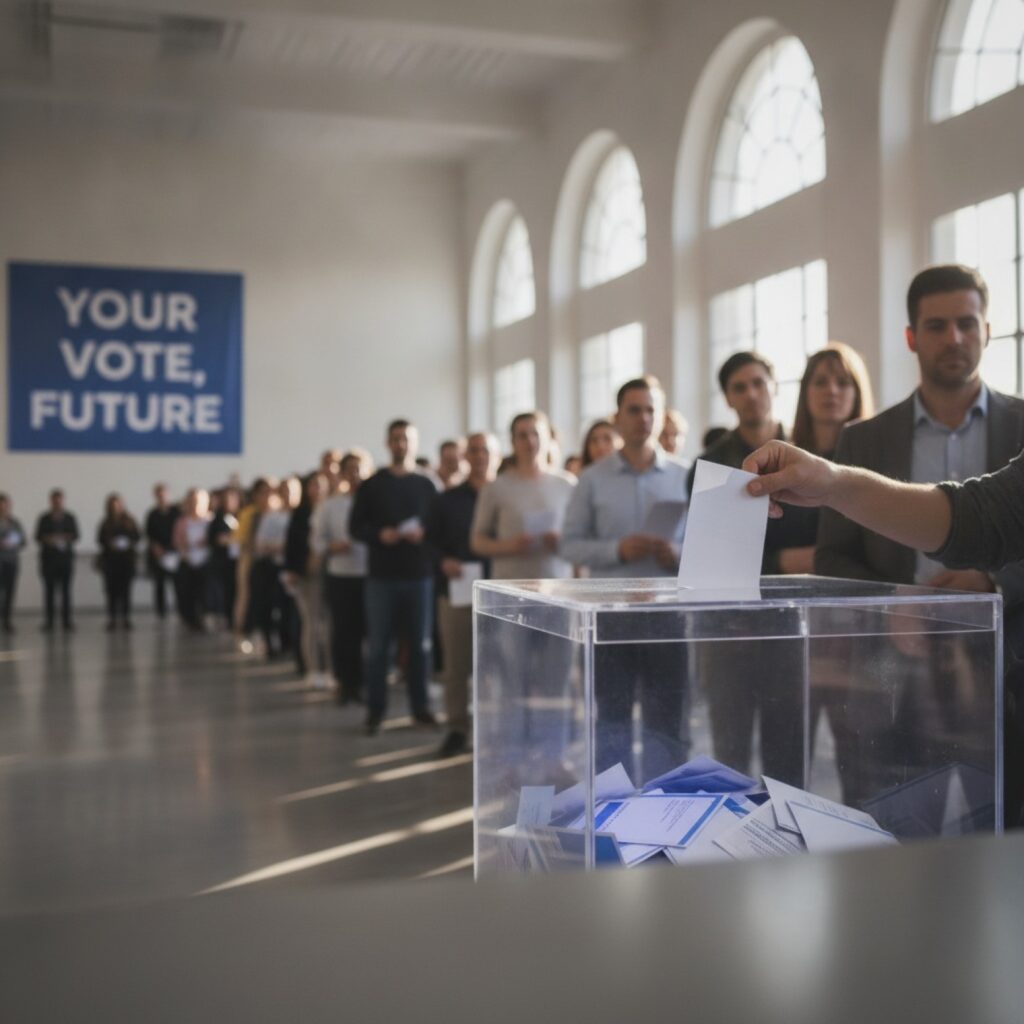
In the U.S. Senate primary election in Alabama, a political action committee (PAC) linked to crypto assets poured substantial funds into the race.Specifically, an organization called “Defend American Jobs” spent a total of $12.1 million (approximately 1.88 billion yen, based on an exchange rate of 155 yen per dollar) on media advertising to support Republican candidate Barry Moore.This campaign took place ahead of the May 20 primary election and the subsequent runoff election. Attention is now focused on the influence the crypto assets industry exerts on U.S. politics.
A political action committee (PAC) is an organization that raises and spends funds for the purpose of supporting specific candidates or political parties.In the United States, such PACs play a crucial role in election campaigns. In recent years, in particular, as crypto assets have become more widespread, organizations known as “crypto PACs”—which represent the industry’s interests—have become increasingly active. By supporting candidates who promote crypto-friendly policies, they aim to improve the regulatory environment.
This large-scale investment by Defend American Jobs can be seen as a clear demonstration of the crypto assets industry’s strong determination to influence specific election outcomes. The election of U.S. senators, in particular, is of critical importance to the industry, as it directly impacts the deliberation of legislation at the federal level.This case highlights the fact that crypto assets have become a force that cannot be ignored, not only in financial markets but also on the political stage. For our readers in Japan as well, developments in the U.S. should serve as a useful reference for predicting future international regulations and market conditions.
The Role of Crypto-Related PACs
Political Action Committees (PACs) are organizations established in the United States to support specific politicians or political parties. They seek to influence election outcomes through campaign contributions and advertising. In recent years, as the crypto assets industry has grown, the number of PACs specializing in this field has increased.
These “crypto PACs” actively support candidates who understand crypto assets and support the industry’s development. Their goal is to foster a favorable regulatory environment and promote innovation. This recent case can also be viewed as part of those efforts.
Overview of “Defend American Jobs” Funding
“Defend American Jobs” invested a substantial amount of funds to support Republican candidate Barry Moore. Specifically, it spent $7.4 million prior to the Alabama primary on May 20. This amount was recorded as media advertising expenses.
In addition, the group spent an additional $4.7 million in preparation for the runoff election (a second round of voting held when no candidate secures a majority in the primary). The total amount spent reached $12.1 million, representing a very large-scale effort to support a candidate.
Background on Support for Candidate Barry Moore
Barry Moore, who is supported by Defend American Jobs, is a Republican candidate. This financial investment is believed to stem from the assessment that he supports—or is highly likely to support in the future—policies favorable to the crypto assets industry.
The crypto assets industry seeks clear and stable regulations. Therefore, supporting politicians who will advocate for the industry and promote appropriate legislation is strategically important for them. It is presumed that the support for Mr. Moore stems from this context.
Scale of Campaign Spending
The $12.1 million spent in this instance is a very large sum for a U.S. local election, particularly at the primary level. This demonstrates the crypto assets industry’s strong desire to increase its influence over the election results.
Substantial spending on media advertising directly contributes to raising a candidate’s profile and promoting their policies. Therefore, it is highly likely that this investment had a significant impact on the outcome of the election campaign. Financial resources are a key factor in election strategy.
The Relationship Between U.S. Politics and the Crypto Assets Industry
In the U.S., there is active debate surrounding the regulation of crypto assets. Multiple regulatory agencies, such as the Securities and Exchange Commission (SEC) and the Commodity Futures Trading Commission (CFTC), are involved, and their jurisdictions and regulatory directions are constantly under scrutiny.
Under these circumstances, the crypto assets industry is advocating for its position with the government and Congress through lobbying and political contributions via PACs. As the industry grows, its political influence is also increasing.
Future Outlook and Key Points
This case has once again demonstrated that the crypto assets industry is deeply involved in the U.S. political process. It is highly likely that crypto PACs will continue to play a significant role in major elections.
In particular, crypto assets policy is expected to be one of the key issues in the 2024 presidential and congressional elections. It is essential to continue monitoring not only industry trends but also changes in the surrounding political and regulatory environment.
[Source: Original Article]
Related Articles

* We are the official distributor of RedotPay in Japan.