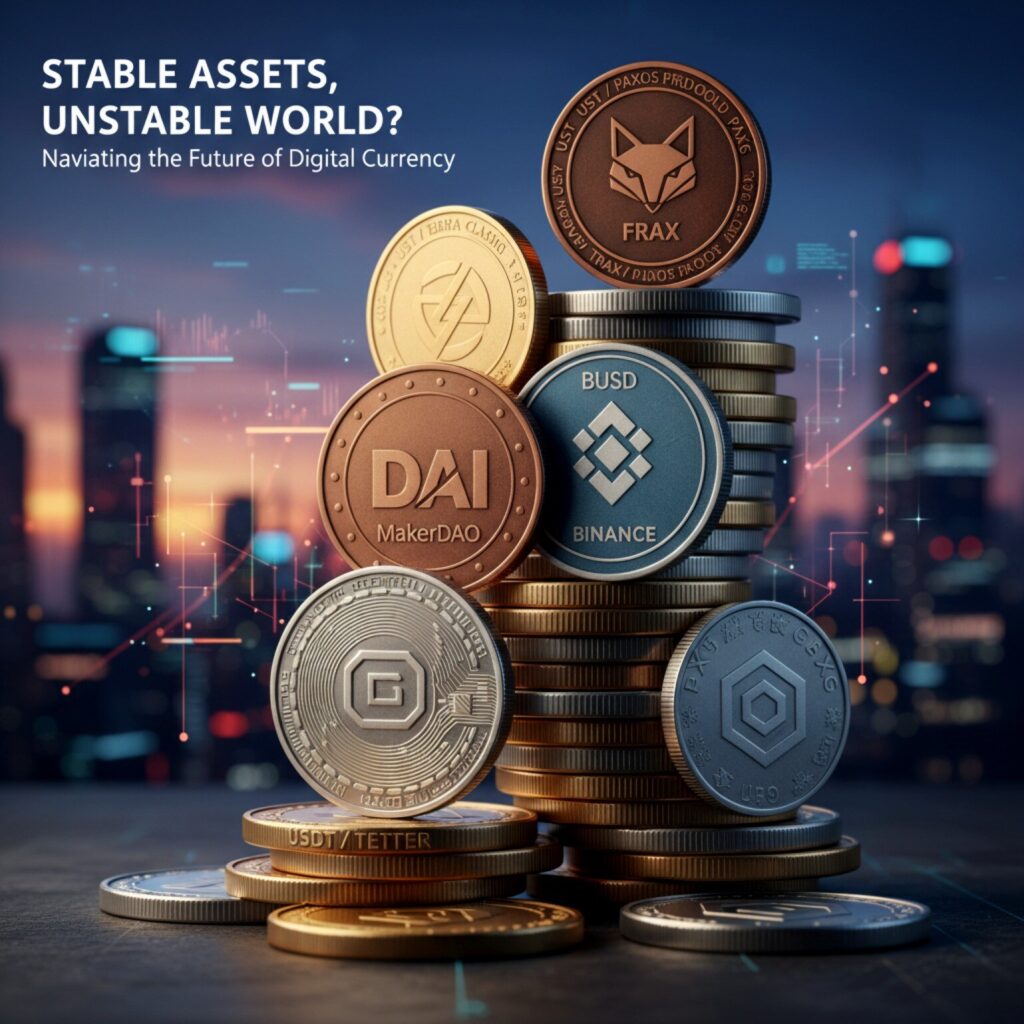
On May 21, 2026, major financial institution JPMorgan released some interesting analysis results regarding the crypto assets market.According to the firm’s report, stablecoins (crypto assets whose value is pegged to fiat currencies or other assets) continue to hold an advantage over tokenized money market funds (MMFs) (traditional financial products that have been securitized as digital assets on the blockchain).This highlights the current situation where, despite tokenized MMFs offering yields (the ratio of returns to the principal investment), their adoption remains limited. Specifically, data showed that tokenized MMFs account for only about 5% of the total stablecoin market.In this article, we will delve deeper into this J.P. Morgan analysis and provide an easy-to-understand explanation—tailored for Japanese working professionals—of the characteristics of stablecoins and tokenized MMFs, their current market status, and future prospects. We hope this information will help those interested in crypto assets better understand the market.
The Advantages of Stablecoins as Pointed Out by JPMorgan
In its latest analysis, JPMorgan highlighted the strong position of stablecoins in the market.
According to the bank’s report, tokenized money market funds (MMFs) account for only about 5% of the total stablecoin market.
Tokenized MMFs offer investors the clear benefit of providing a yield.
However, the report noted that despite these benefits, their market presence remains small.
This analysis suggests that stablecoins continue to play a central role in the crypto assets ecosystem.
It is possible that many users prioritize other factors over yield.
What Are Stablecoins?
Stablecoins are crypto assets designed to maintain price stability.
Their value is pegged to fiat currencies, such as the U.S. dollar, or tangible assets, such as gold.
This sets them apart from crypto assets like Bitcoin, which are subject to significant price volatility.
Their primary uses include serving as a means of payment for crypto asset transactions and as a store of value.
They are also widely used as the foundation for decentralized finance (DeFi)—financial services provided on the blockchain.
Due to their stability, they are trusted by many users, and their use is expanding.
Overview of Tokenized Money Market Funds (MMFs)
Tokenized MMFs are traditional MMFs that have been digitized as securities on a blockchain (distributed ledger technology).
MMFs are typically invested in short-term, safe bonds and other instruments, providing stable returns.
By tokenizing them, users can benefit from the convenience and transparency of blockchain technology.
Examples include 24/7 trading and automation via smart contracts (contracts that execute automatically on the blockchain).
Since investors can earn MMF returns in the form of crypto assets, this is attracting attention as a new investment opportunity.
However, their adoption remains limited at present.
Reasons for Slow Adoption Despite Attractive Yields
Why hasn’t the adoption of tokenized MMFs progressed, despite the returns they offer?
One factor is the uncertainty surrounding the regulatory environment.
The convergence of traditional financial products and crypto assets may be subject to different regulations in each country.
Furthermore, compliance requirements—such as KYC (know-your-customer procedures) and the Travel Rule (an international regulation requiring the sharing of sender and recipient information for crypto assets)—are complex.
Furthermore, they do not match the overwhelming liquidity (the ease with which assets can be converted to cash) of existing stablecoins.
Many users tend to prioritize immediacy and ease of use over yield.
Reasons for Choosing Stablecoins
The main reasons people choose stablecoins are their convenience and reliability.
They are widely accepted as the base currency on many exchanges and DeFi protocols.
They enable rapid transfers and settlements, making them well-suited for cross-border transactions.
Additionally, since their underlying assets are often clearly defined, they can be used with relative peace of mind.
Compared to tokenized money market funds (MMFs), they function as a simpler and more direct means of exchanging value.
This ease of use is a key factor in their popularity among a broad user base.
Future Market Trends and Challenges
J.P. Morgan’s analysis can be seen as an indicator of the maturity of the crypto assets market.
Stablecoins will continue to be a critical infrastructure for the digital economy.
On the other hand, tokenized MMFs may increase their presence as regulatory clarity and technical improvements progress.
It is important to recognize that the convergence of traditional finance and crypto assets is still in its early stages.
Market participants must understand the characteristics of each and exercise careful judgment.
Future regulatory developments and technological innovations may alter the balance of power between the two.
[Source: Original Article]